
Search
Compliance frameworks involve multiple layers of expectations, implementation steps, and validation processes. The Uproot platform simplifies this by structuring every framework into three interconnected components: requirements, controls, and tests.
This structure gives teams clarity on what needs to be achieved, how it is implemented, and how it is continuously validated—all within a single workflow.
Framework requirements define what a compliance framework expects an organization to achieve. They focus on outcome-level objectives such as security, availability, system reliability, and risk management.
Requirements are high-level goals—they explain what needs to be achieved rather than how to do it. During an audit, these requirements show the conditions your organization must meet.
In the Uproot platform:
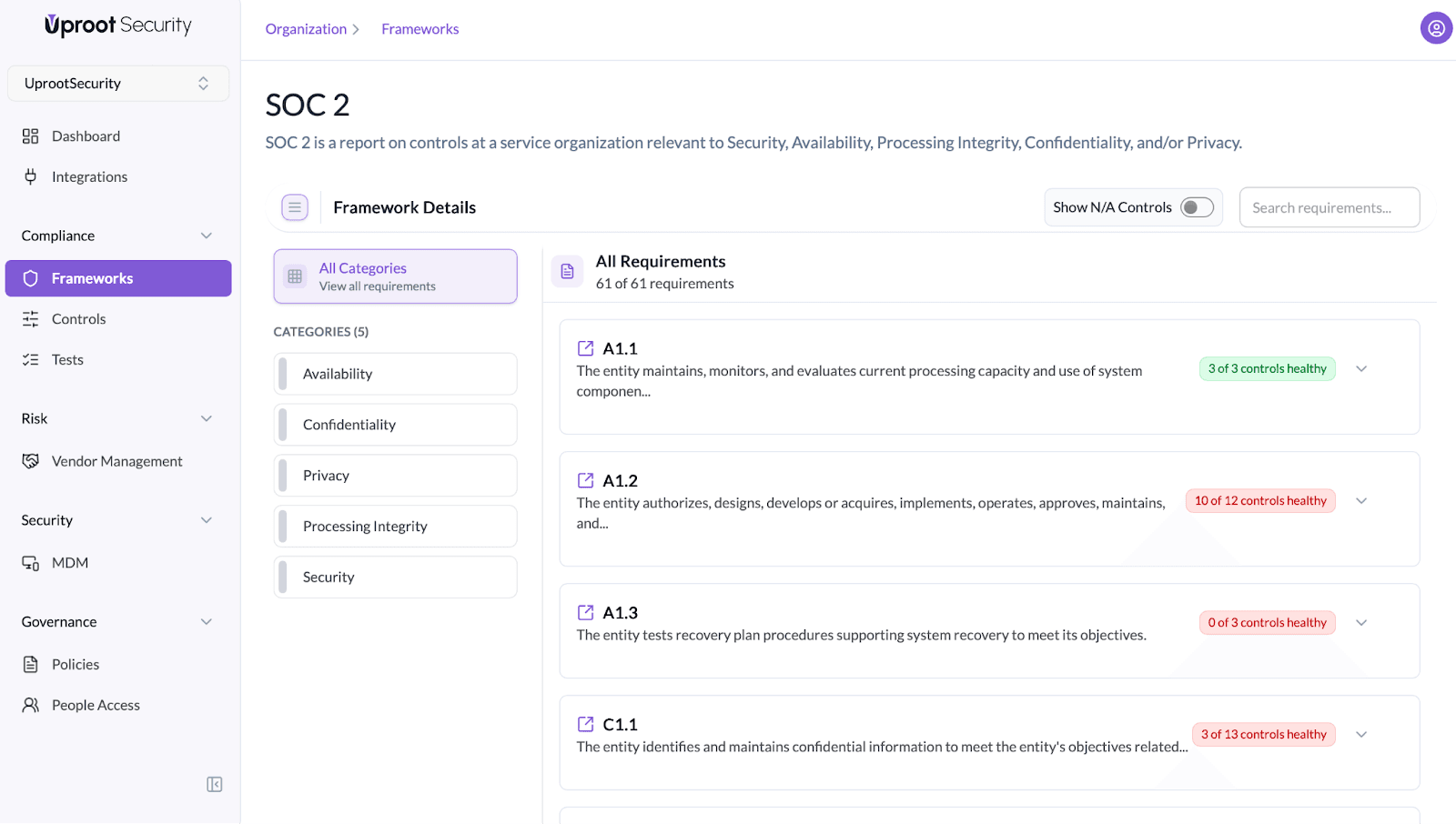
For instance, SOC 2 requirements are organized under five Trust Services Criteria (TSC)—security, availability, processing integrity, confidentiality, and privacy. Under SOC 2, system availability is one such requirement, ensuring that systems can handle capacity demands and remain operational.
Controls define how a requirement is fulfilled in practice. They translate high-level compliance expectations into concrete technical, operational, or procedural safeguards, making them the actionable layer of compliance.
In Uproot, each control includes:
Controls can support one or multiple requirements, helping organizations avoid duplication and maintain consistency.
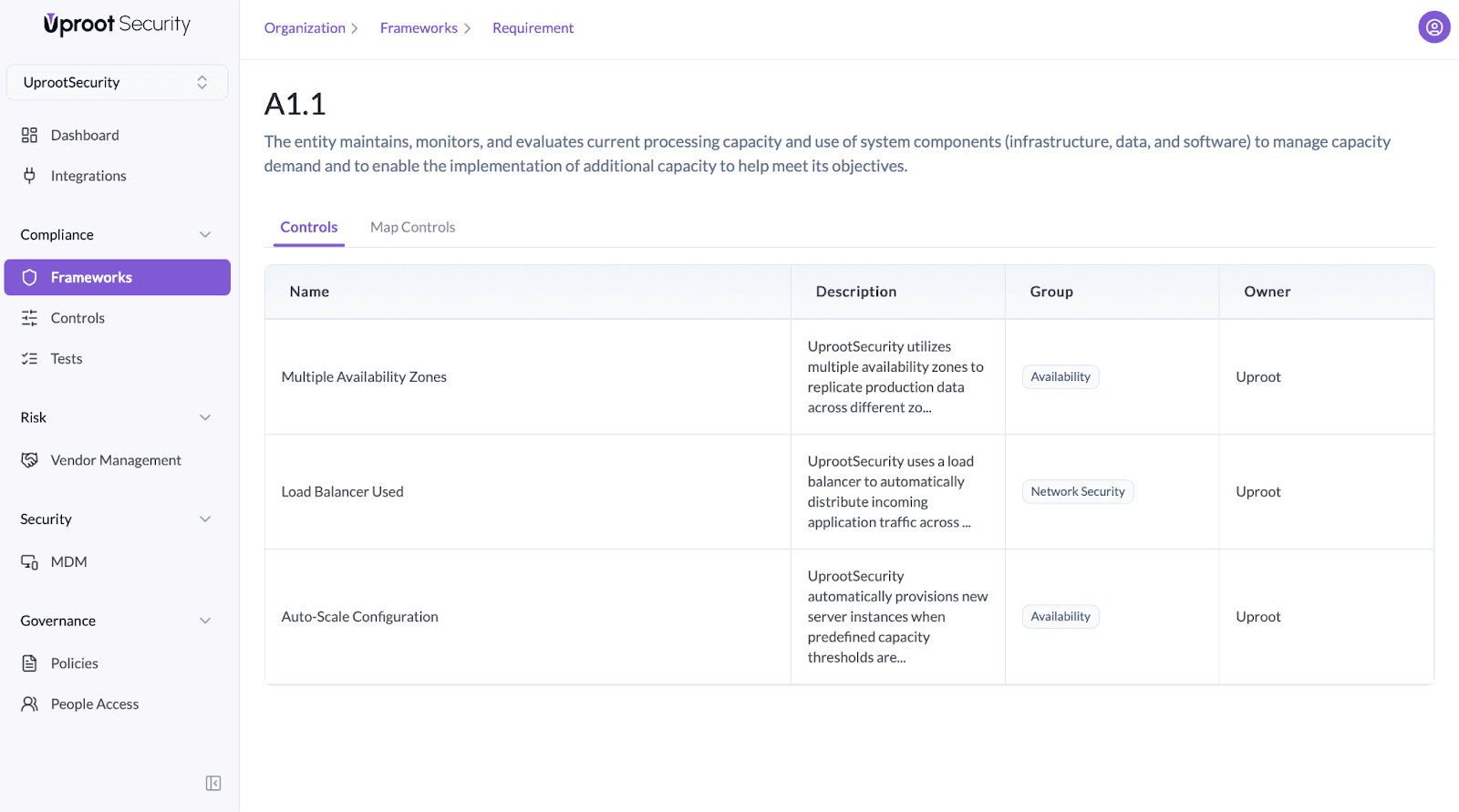 For example, an availability requirement under SOC 2 may be supported by controls describing multi-zone infrastructure deployment, traffic distribution, or automatic capacity scaling. Each control assigns ownership and defines how the requirement is concretely addressed.
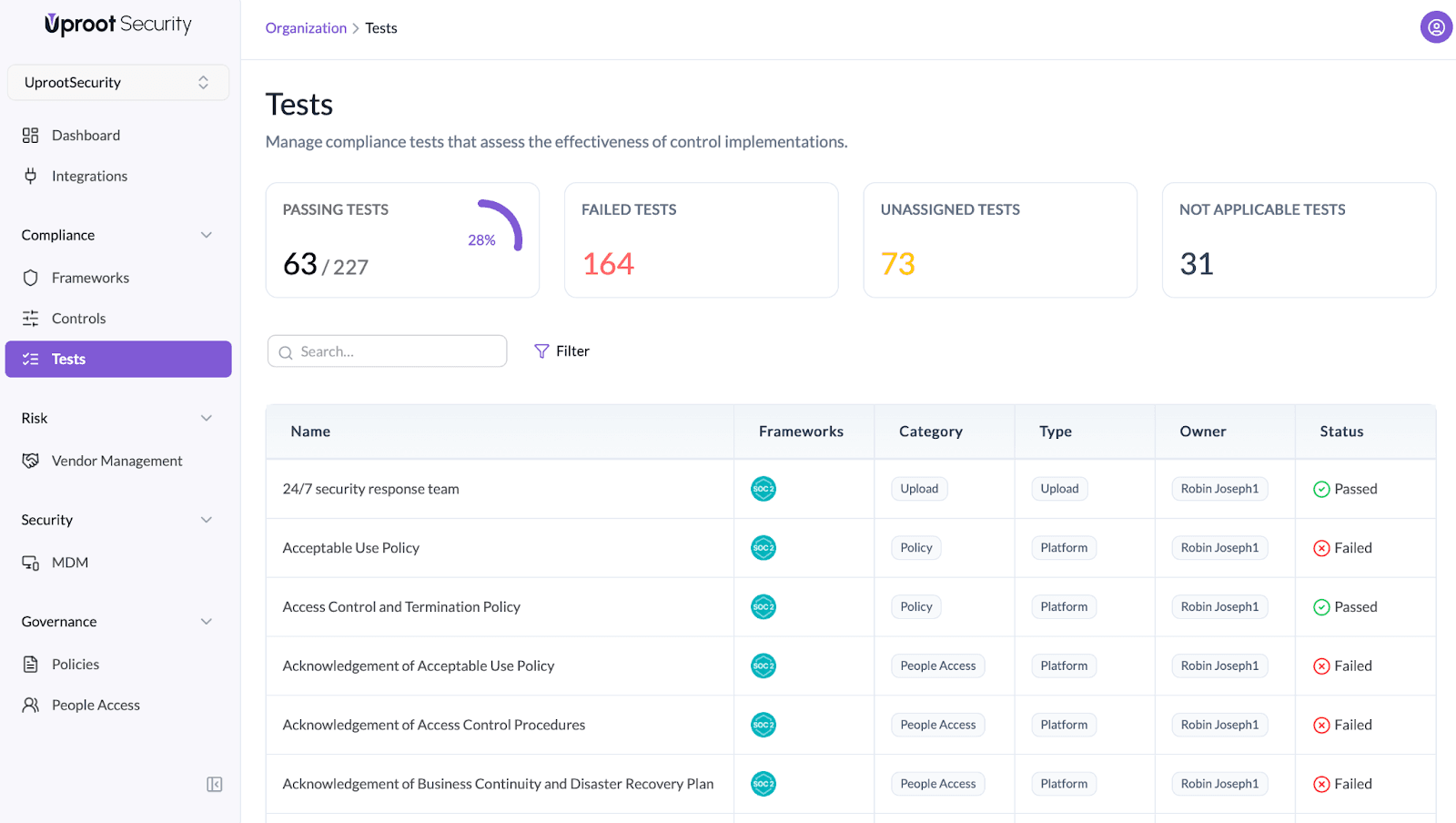
Tests verify that controls are operating as intended, providing objective validation and generating reliable evidence for audit review.
Tests answer a critical question:
Is this control actually working?
In Uproot, tests:
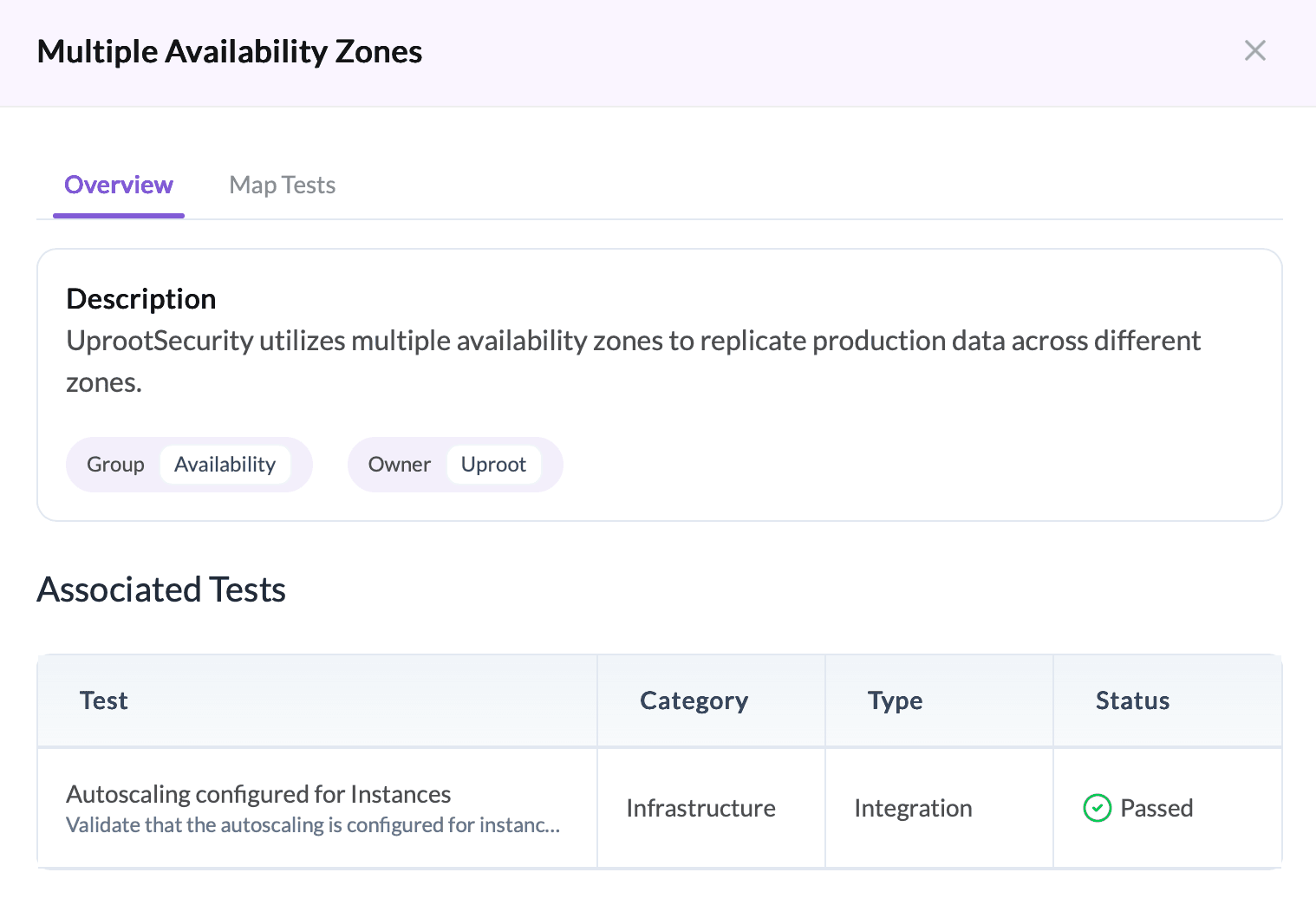 For instance, a control supporting SOC 2 availability requirements may include a test that continuously checks autoscaling configurations. Passing tests keep the control and requirement healthy, while failures immediately signal risks that need remediation.
Uproot lets users navigate easily from high-level compliance visibility to detailed operational validation.
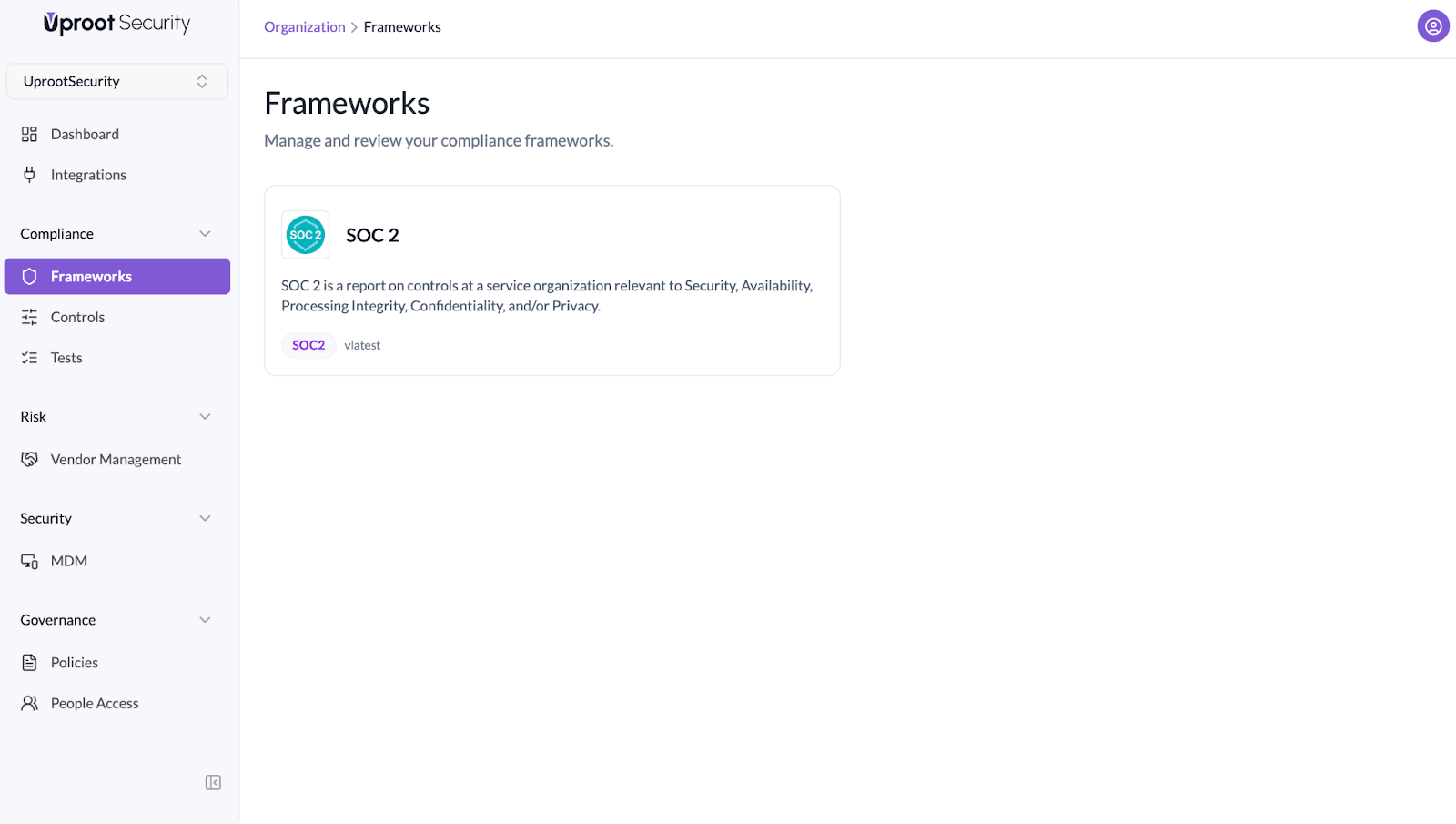
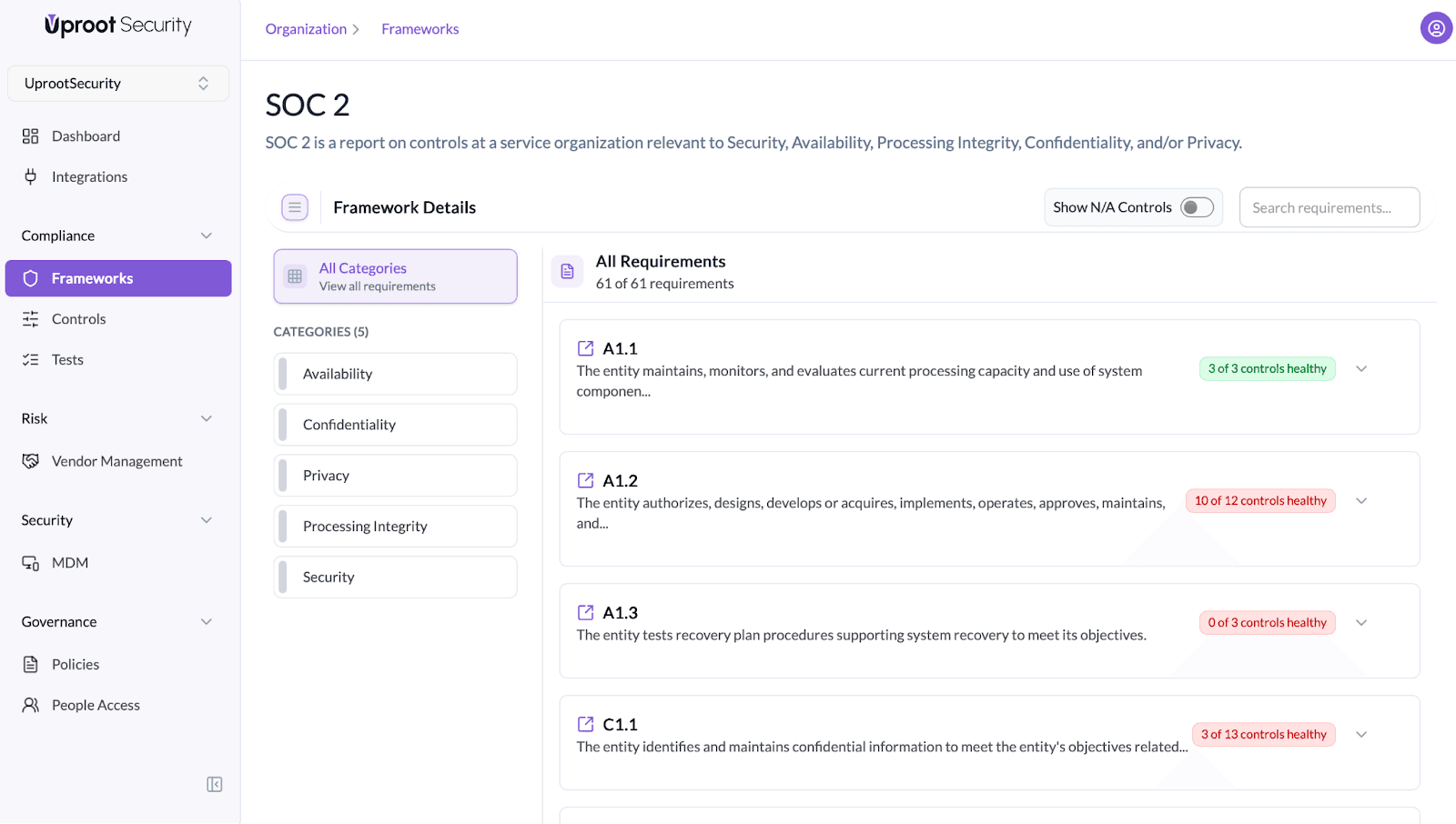
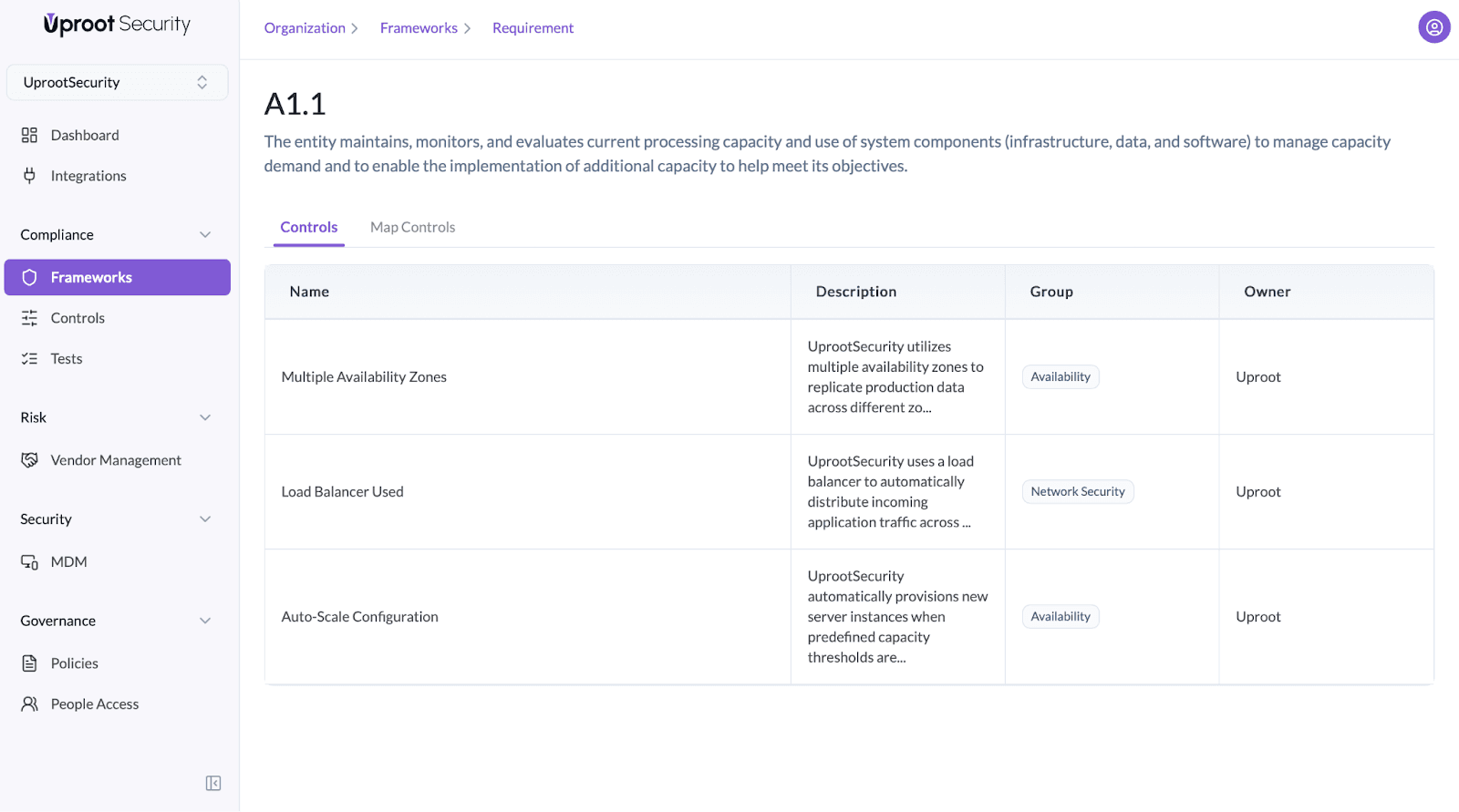
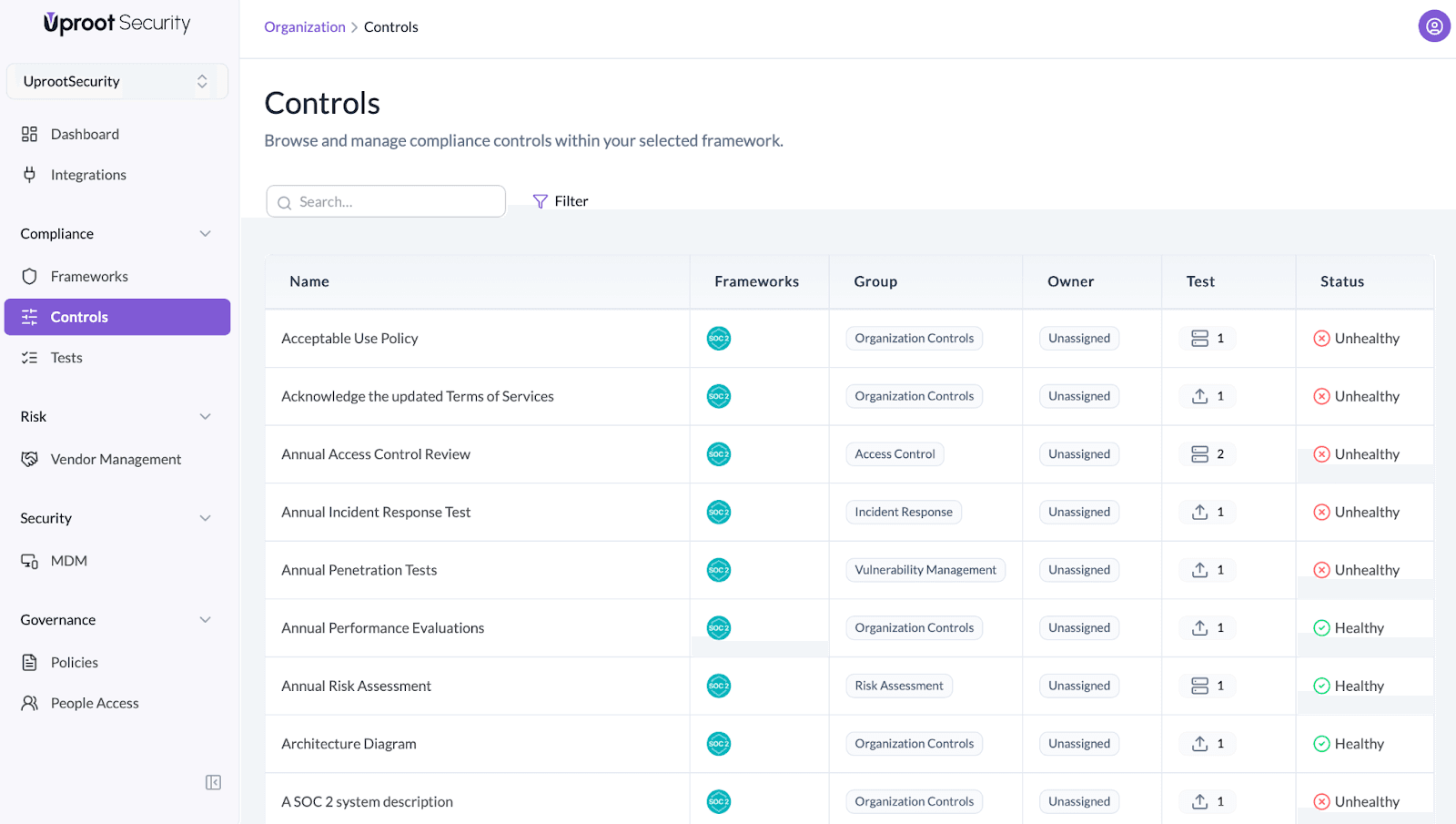
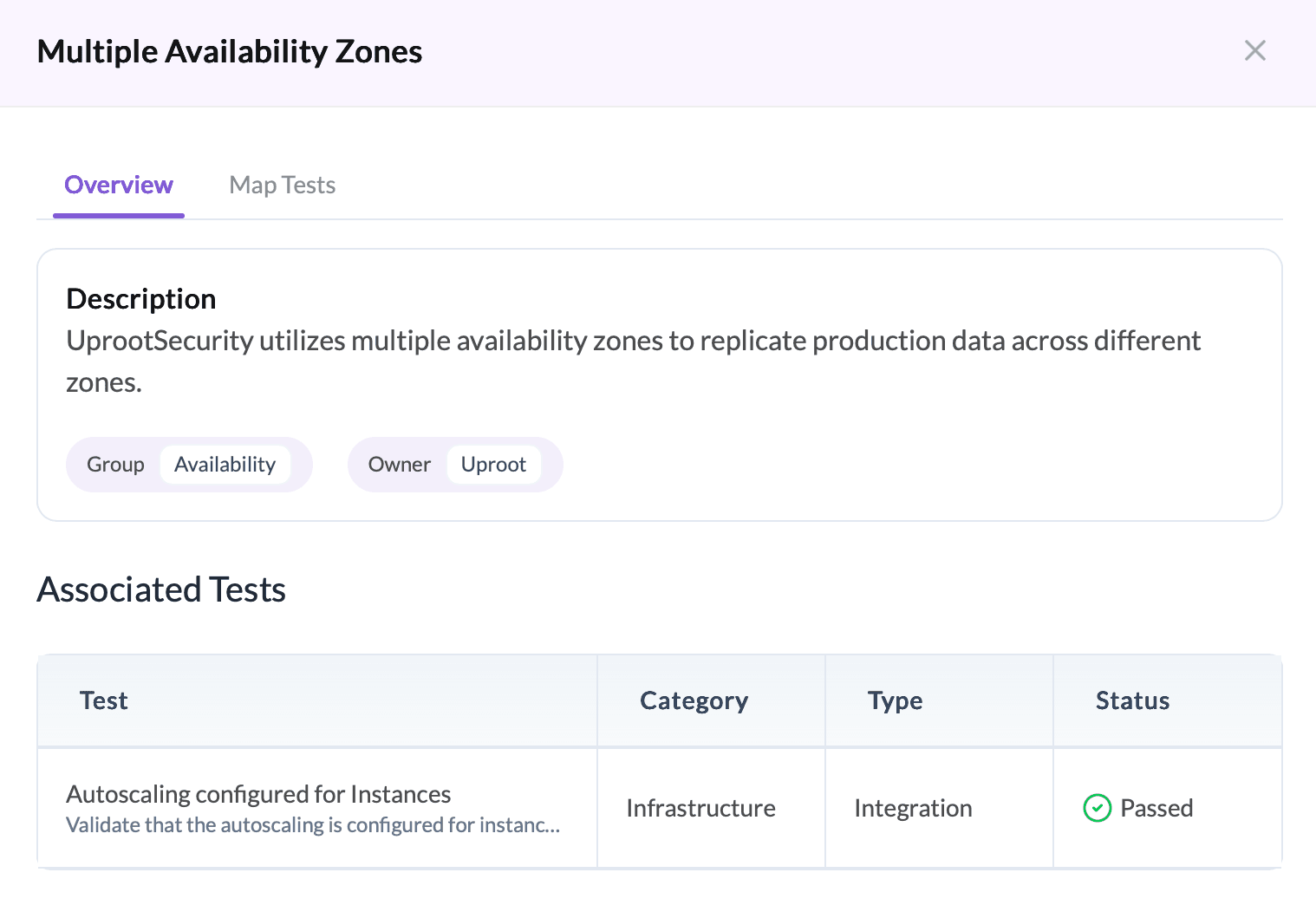
In Uproot, compliance follows a clear and auditable flow:
This ensures every requirement is backed by clearly owned controls and continuously validated through tests, keeping organizations audit-ready and confident that their compliance posture is accurate and up to date.
Powered By SparrowDesk